Designing Roundabouts for the Communities They Serve
Community Engagement

How engineering, coordination, and public engagement shape a successful intersection.
A roundabout changes more than the traffic pattern at an intersection. It can affect how residents reach their homes, how businesses receive deliveries, how students cross the road and how emergency vehicles, school buses, trucks and agricultural equipment move through the community.
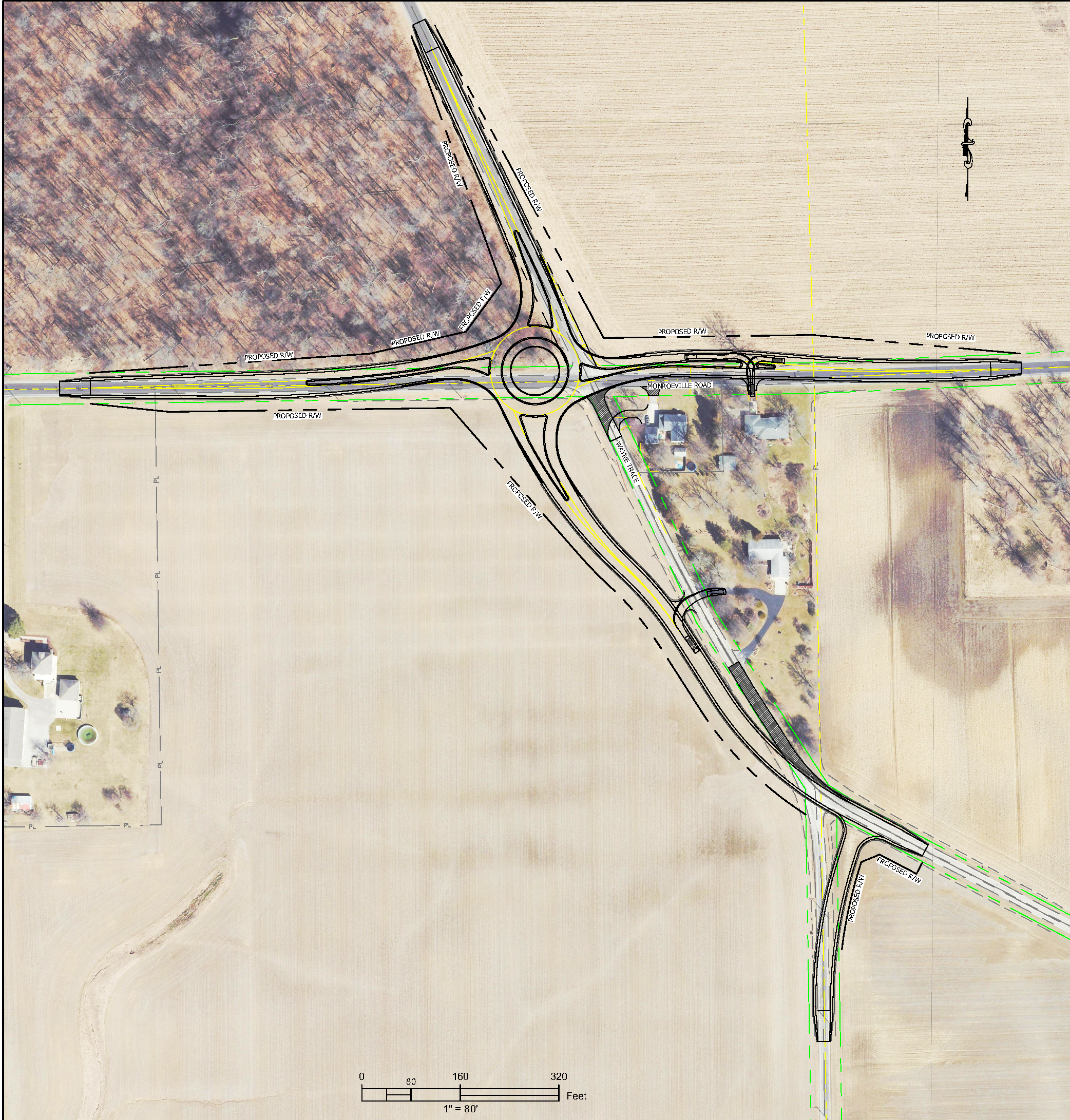
Those considerations are important on every roundabout project. They become especially visible when a community is preparing for its first one.
Residents may be unfamiliar with how the intersection will operate. Property owners may have questions about access and right-of-way. Public works staff are considering drainage, utilities, snow removal and long-term maintenance. Emergency responders and school officials need to understand how their vehicles and routes will be accommodated.
Addressing those questions takes time, careful engineering and clear communication.
The Federal Highway Administration identifies roundabouts as a Proven Safety Countermeasure. Their curved approaches, lower operating speeds and one-way circulation reduce the number and severity of potential conflict points compared with many traditional intersections.
Those safety principles provide the foundation. A successful roundabout must also respond to the specific site and earn the community’s understanding.
Community engagement is part of the design process
Public involvement should begin before the design feels final.
Concept exhibits, public meetings and project updates give residents an opportunity to understand why an improvement is being considered and how the proposed intersection would operate. They also give the project team an opportunity to listen.
Community members often know details that traffic counts and mapping cannot fully capture. They know when school traffic arrives, which routes agricultural equipment uses, where pedestrians already cross and how seasonal events affect traffic. Nearby property owners can explain access needs, delivery patterns and other daily conditions that may influence the design.
Community input does not replace engineering analysis. It adds local context.
Clear communication is equally important. Plan sheets and technical terminology may make sense to the project team but provide little reassurance to someone trying to understand how they will reach their driveway. Renderings, diagrams and plain-language explanations can help people picture the completed intersection and understand what to expect during construction.
For communities introducing their first roundabout, that time and attention can make a significant difference. People may not agree with every decision, but they should understand the purpose of the project, how concerns were evaluated and how the intersection is intended to work.
Start with how the intersection is used
Community input is one part of a larger evaluation of the existing intersection.
The project team studies traffic volumes, crash history, turning movements and expected future demand. Engineers also identify the vehicles that must regularly use the intersection, which may include school buses, emergency vehicles, delivery trucks, semitrailers, agricultural equipment and snowplows.
Pedestrian and bicycle connections matter too. Sidewalks, trails, schools, parks, businesses and nearby neighborhoods affect how people approach the intersection and where crossings should be located.
Together, these details help determine whether a roundabout is the appropriate solution and, if it is, what the intersection needs to accommodate.


